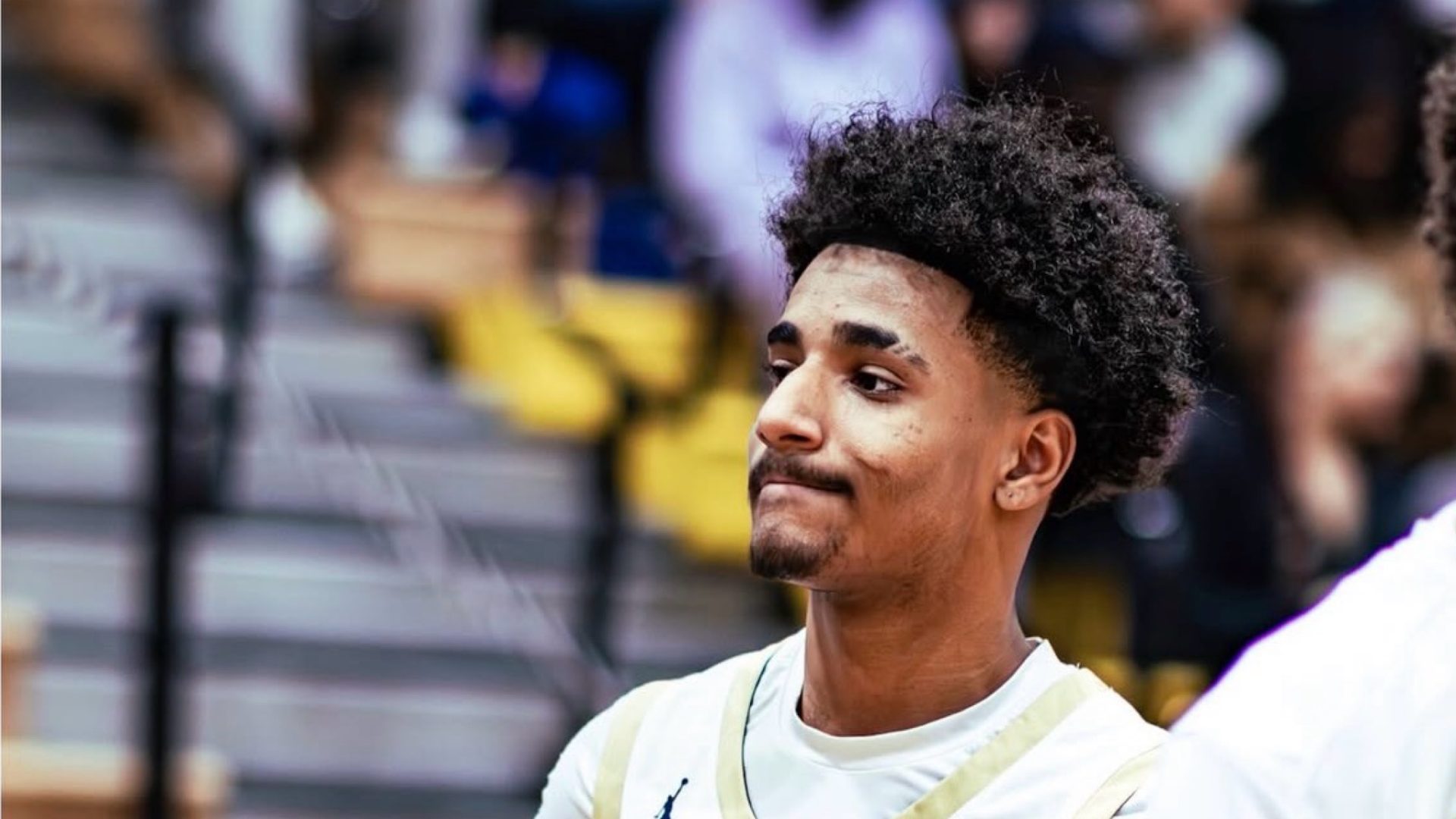
Football may control the calendar right now, but Section IX boys basketball is already entering its next chapter.
Summer workouts are underway. Players are competing on travel circuits, developing their games and preparing for expanded roles. Coaches are evaluating what they have, what they lost and what must change before official practices begin.
The final rosters, classifications and preseason rankings will come later.
For now, the foundation of the 2026–27 season begins with what happened last March.
Kingston won Class AAA. Goshen captured Class AA. Beacon emerged from Class A. Onteora claimed Class B. Mount Academy controlled Class C, while Chapel Field represented Section IX in Class D.
Six different programs reached the top of their classifications.
But the larger postseason picture delivered a more difficult reality.
No Section IX boys basketball team reached the 2026 state semifinals in Binghamton.
That is the standard the section must now attempt to change.
Kingston Remains the Large-School Standard
Kingston entered the Class AAA tournament as the top seed and finished the job.
The Tigers defeated Monroe-Woodbury 50–34 in the semifinal before overwhelming Our Lady of Lourdes 81–64 in the championship game. Kingston built a 33–3 first-quarter lead against Lourdes and carried a 44–14 advantage into halftime.
That performance demonstrated how dangerous Kingston could become when its pace, pressure and shot-making worked together.
The Tigers’ state tournament ended four days later with a 64–45 regional-semifinal loss to Mamaroneck.
Kingston therefore enters the next cycle carrying two different responsibilities.
First, the Tigers must defend their position inside Section IX against Lourdes, Newburgh, Monroe-Woodbury and the rest of the large-school field.
Then comes the larger question.
Can Kingston—or another Class AAA program—build a team capable of defeating the strongest programs coming from Section I?
Winning the section establishes local control.
The next breakthrough must happen beyond it.
Class AA May Become the Most Unpredictable Race
Goshen entered the 2026 Class AA tournament as the No. 1 seed and defeated Warwick 59–51 in the championship game. The Gladiators then saw their season end against Rye, 62–47, in the state playoffs.
But the Class AA bracket showed why this division should demand attention again.
Valley Central entered as the No. 2 seed. Warwick reached the championship as the No. 3 seed. Washingtonville and Wallkill were also part of the field.
Goshen begins the offseason as the defending champion, but defending a title requires replacing production, handling increased expectations and surviving a classification filled with programs capable of changing quickly.
Warwick already proved it could reach the final.
Valley Central earned one of the tournament’s top seeds.
Washingtonville defeated Wallkill to advance before falling to Goshen.
The early Class AA outlook should not begin with an automatic favorite. It should begin with a question:
Which program will develop the most between March and December?
Beacon Broke Through a Deep Class A Field
Class A contained one of the largest and most competitive brackets in the section.
Beacon, Red Hook, Saugerties, Spackenkill, New Paltz, Burke Catholic, Highland, Liberty, Marlboro and Port Jervis all entered the tournament.
Beacon ultimately emerged as the champion, defeating Red Hook in the Class A final before falling 49–33 to Tappan Zee in the regional semifinal.
The depth of that field makes Class A difficult to project months before the season.
Saugerties earned the No. 3 seed but lost to Red Hook in the semifinal. Spackenkill and New Paltz met in another competitive portion of the bracket. Highland won its opening-round matchup before facing Red Hook.
Beacon now owns the championship.
That does not mean the Bulldogs own the next season.
Class A may ultimately be decided by player development, guard play and which program can replace graduating leadership most effectively. With so many teams in the field, one injury, transfer, breakout underclassman or unexpected rebuild could reshape the entire bracket.
There may be no classification in Section IX with more possible storylines.
Onteora Has the Class B Crown
Onteora entered the Class B tournament as the No. 2 seed.
The Eagles defeated Chester 77–56 in the semifinal and then captured the sectional championship. Their state run ended with a 67–50 loss to Woodlands in the regional semifinal.
O’Neill held the top seed in the sectional bracket, while Chester, Ellenville and Rhinebeck completed the field.
That creates immediate intrigue entering the new season.
Onteora has the title, but O’Neill had the regular-season résumé to earn the No. 1 seed. Chester reached the semifinal and scored 56 points against the eventual champion. Ellenville and Rhinebeck remain capable of making the bracket uncomfortable.
Class B may not have the number of programs found in Class A, but its smaller field makes every matchup more important.
One strong class can change a program quickly.
One difficult graduation cycle can do the same in the opposite direction.
Mount Academy Controlled Class C
Mount Academy was the top seed in Class C and validated that position.
The Eagles defeated Eldred 69–40 in the sectional championship game, with Bruce Maendel scoring 34 points. Mount finished the season 16–6 before losing 67–28 to Berne-Knox-Westerlo in the regional semifinal.
Eldred, Rockland, Webutuck and S.S. Seward made up the rest of the Class C bracket.
Mount Academy enters the offseason with the clearest recent result in the classification: a 29-point victory in the sectional final.
But Class C’s next chapter will depend heavily on what returns.
Smaller-school basketball can change dramatically from one season to the next. A program may lose only two or three seniors, but those players can represent most of its scoring, rebounding or ball-handling.
Mount established the standard in March.
The next question is whether anyone in the classification can close the distance.
Chapel Field Went Furthest
Chapel Field did not have to play a Section IX Class D championship game because the bracket listed no opposing team. The Lions advanced into the state tournament as the section’s Class D representative.
What they did afterward deserves recognition.
Chapel Field defeated North Warren 44–41 in the regional semifinal, becoming the only Section IX boys champion or representative to win a state-playoff game in 2026. The Lions then fell 77–35 to Bridgehampton in the regional final.
The final result was lopsided, but Chapel Field still moved closer to Binghamton than any other Section IX boys program.
That should matter when the next season begins.
The Lions showed that a small Section IX program can advance beyond the opening state round. The next challenge is strengthening the Class D structure locally and producing a representative prepared for the size, speed and depth waiting beyond the section.
Section IX Must Raise the Next Standard
Sectional championships matter.
They create history, fill gymnasiums and give communities moments they will remember long after the final buzzer.
But Section IX boys basketball cannot measure its progress only by what happens against itself.
The 2026 postseason produced six champions or representatives but no state semifinalist.
Kingston, Goshen, Beacon, Onteora and Mount Academy were eliminated in their opening state games. Chapel Field won once before falling in the regional final.
That does not erase what those teams accomplished.
It identifies the next objective.
Section IX needs teams that can handle pressure defense from outside the area, score consistently against elite opponents and adjust when the style of play changes in the state tournament.
That development does not begin in February.
It begins now.
It happens during summer workouts, fall open gyms, individual training sessions and every opportunity players have to improve before the season officially starts.
The championship races will eventually dominate the conversation.
Kingston will defend Class AAA.
Goshen will defend Class AA.
Beacon, Onteora and Mount Academy will attempt to protect their positions, while Chapel Field will look to build upon the section’s deepest 2026 state run.
But the biggest question facing Section IX boys basketball is larger than any individual classification.
Who will become the team capable of carrying the 845 beyond the sectional stage and back into the state championship conversation?
